
Monday, July 31, 2006
Noonan on the President
Peggy Noonan offers what reasonable people would characterize as gentle criticism of the President in her latest editorial in the Online Journal.
It’s not a comprehensive essay, rather more disjointed travelogue through Noonan’s troubled consciousness about George Bush, his habits of mind, his political philosophy, even his sometimes too-familiar manner.
That latter point sticks in Noonan’s craw over the President so frequently referring to Secretary Rice as “Condi.”
I have been a big and early fan of Secretary of State Condoleeza Rice. I greatly admire her intellect, her drive, her professional credentials, her personal history. Whatever reservations I harbor about her recent out-front diplomatic efforts – she remains, after all, Secretary at the helm of the Department with the well-deserved reputation for foggy bureaucracy – I nevertheless appreciate that Madame Secretary is bright, tough, decisive, and charismatic.
And no, I wouldn’t dream of calling her Condi either. But then, we’re not old friends or trusted colleagues, either.
Perhaps she takes the tact that I often use with my superiors in the military. Many of my superior officers, and most often my Command Sergeant Major (CSM, one enlisted rank higher than I, and a level higher in authority), call me Jeff and are otherwise very familiar with me. I always address officers as Sir, the CSM as “Sergeant Major,” and expect my subordinates to do likewise with me.
Rank has its privileges as they say, and I am quite certain that most Presidents use familiar names and even nicknames for their most trusted aides, advisors and cabinet Secretaries, they just don’t mention them in private.
Think FDR, Eisenhower, JFK, LBJ and Nixon (especially), Ronald Reagan and Clinton. We may never have heard the familiarities, I have no doubt whatsoever others did. Call it discourse in the electronic age.
Noonan also remarks on a social construct, a habit of discourse and mind, for which she finds no proper label. The circumstance was the staged-for-public-consumption meeting between Secretary Rice and Lebanese Prime Minister Fuad Saniora. They shared kisses on the cheek when greeting it other before cameras, “as if they had a personal relationship unstressed by the current war.”
Noonan explains what she thought about this (emphasis mine):
I know it is spin. You know it too. And yet it worked for me. I found it a relief. I believed both Ms. Rice and Mr. Saniora were well-meaning friends who can help see the world through the mess. I was being spun, knowing I was being spun, and aware that I'd been spun successfully. There should be a name for this, for the process whereby one knows one is being yanked and concedes it has been done successfully--that one is grateful to have been spun. In the theater, it is called the willing suspension of disbelief. That's what allows the play to make an impact on the audience: they have to be able to make believe that what's happening on the stage is really happening. Maybe to a degree it is a requirement for all political participation, all effective political communication, too.
I know what she means, but I think Noonan misses what is a more timeless, universal quality to what she notes in such mutually-agreed-upon portrayals.
There is a kind of tacit understanding, some primitive desire for community that formed the basis for all of civilization. I believe in God, so I’d want to say He gave us that desire; others can chalk it up to some evolutionary hardwiring that gave humanity their ability to be social animals, first and foremost. To allow this, people must be willing to not kill each other, for food or anything else, to entertain the possibility of friend and partner.
Civilization is impossible without it. It is also – by the way – what separates us from the modern-day fans of the 7th Century Caliphate, as well. Understandable that Noonan might see such a phenomenon as just one more political construct, but if so, it’s the politics of humanity. And well might we thank


Friday, July 28, 2006
Get Thee to an Embassy
“Heh” if ever there was a “Heh.”
Glenn Reynolds notes some good evidence against the idea that Hezbollah is winning in their misadventure against
Glenn offered what will have to stand as the best commentary for the entire 2006 season of the Hezbollah – Israel War:
The Iranians are no doubt confident that no one would be so depraved as to disregard the sanctity of an embassy.
Lebanon Speculatation
Wretchard of The Belmont Club speculates on what how the current fight in
Here’s a taste, but go read the whole thing:
From this observation I'm going to say that despite the received wisdom of the newspapers to the contrary, the fighting at Maroun al-Ras and Bint Jbeil have been and continue to be an unmitigated defeat for the Hezbollah. The Hezbollah are doing the single most stupid thing imaginable for a guerilla organization. They are fighting to keep territory. Oh, I know that this will be justified in terms of "inflicting casualties" on the Israelis. But the Hez are probably losing 10 for every Israeli lost. A bad bargain for
Reduced to its essentials, the IDF strategy may be ridiculously simple: fix the Hezbollah force in Southern Lebanon while detaching its command structure from the field by simultaneously striking
Wretchard makes many more fine points, but go read his initial post here, and a postscript here.
(H/T Rich Lowry at The Corner, cross-posted at Milblogs)
Linked at Blogotional.
A Day for Opinion
Could there be any set of reactions more predictable? There they were, lined up this morning over at Real Clear Politics:
Dems' New Approach: Pander and Run - Peter
How to Win in a Red State - Sen. Ken Salazar, Blueprint Magazine
Bring the Bloodshed to an End - Warren Christopher,
Let Israel Win the War - Charles Krauthammer,
Room for Diplomacy in the Middle East - Sen. Joseph Biden,
Negotiations Alone Never Brought Peace - Ed Koch, RealClearPolitics
Beinart, a Liberal Hawk that defines the type, argues that Democrats risk convincing the American public that they only move to the right to score political points, not ever out of conviction. By pandering, they remind the public that they have no core beliefs save winning office.
Senator Salazar offers a unintended rebuttal of sorts, that demonstrates that all those red state right side issues that Democratic pols need to sound right on, are genuinely held. Really, they mean it, it’s not just pandering.
Here’s Sen. Salazar’s list, with some translation for the politically unsophisticated:
Security first. We all know why this needs to be first for Democrats, as counter-argument to the prevailing wisdom.
Traditional values. Here, Sen. Salazar uses the codeword “rural.” That’s red state on the local level.
Faith. This has been thoroughly Dem-tested by now. The aim is to talk about “Beautitudes.” That’s all the easy and nice parts of Christianity without any of those offensive sin problem and “Jesus as Savior” parts that offend everybody.
Restrictions on abortion. Just so long as we maintain the Roe v. Wade status quo, and we won’t say another word about it, okay?
Security again. Mention WWII and the Greatest Generation. See the first item.
Energy
Former (and largely ineffective) Secretary of State Warren Christopher says we need to “bring bloodshed to an end.” Do we really need to read the article?
No, but by way of confirming one’s preconceptions: Christopher intentionally distorts the public, diplomatic statements of the current Secretary of State, describing her position as insisting “that any cease-fire be tied to a "permanent" and "sustainable" solution to the root causes of the conflict.’ That’s not what she’s been saying. What she said amounts to, “there’s no point to calling a cease fire in which only one of the warring parties actually stops fighting.” If
Christopher’s prescriptions are as irrelevant as the revisionist history he peddles. Quite understandable, since he seeks to burnish the reputation of an Administration that fiddled with Interns while the world burned.
The ever sharp and insightful Charles Krauthammer beseeches us to just “let
No, but by way of confirming one’s confidence, here’s Krauthammer at his best:
The perversity of today's international outcry lies in the fact that there is indeed a disproportion in this war, a radical moral asymmetry between Hezbollah and
In perhaps the most blatant terror campaign from the air since the
But it is a dual campaign. Israeli innocents must die in order for
Let
Senator Joe (“Listen, Jack”) Biden charts the great obtuse middle ground by cautioning us that “there’s room for diplomacy, Jack.” (And my name’s not Jack, Joe.)
Sen. Biden starts off his Ode to Self with this bromide: “As bad as the situation looks, there is an opportunity for an outcome that sets back the extremists and benefits the moderates. Producing that outcome requires imaginative, energetic, and sustained diplomacy, led by the
Wow, that’s all it needs, imagination and energy. That sure doesn’t sound like a military solution, but it doesn’t sound really mean or critical, either. He follows with several suggested steps that rely entirely on the spontaneous goodwill of others and not at all on anything from us. Wow, that’s imaginative, alright. Not too energetic for us, plenty of energy required from others. Sounds just right. If it fails, it’s Bush’s fault. If it succeeds, then it’s those Imaginative Dems that can take credit. Don’t take my word for it, here again is Sen. Biden:
It won't be easy, but if we succeed, we can do what our misadventures in the region have so far failed to accomplish: Shift the balance in the
Thank God for former New York City Ed Koch, always a helpful voice, but especially so after what 9/11 brought to his beloved city. He preaches to the choir, pointing out the time-tested limitations on diplomacy, especially against those so dedicated to evil, as to use our very humanity against us.
There are those who believe that negotiations without the will to engage in military action will suffice. They are wrong. For 58 years,
Negotiating after defending oneself -- as
Rarely do you see the contrast of arguments and political stances so clearly delineated, as has been made very clear with Hezbollah’s recent aggression against
What a day for Opinion!
Thursday, July 27, 2006
Noonan on the President
It’s not a comprehensive essay, rather more disjointed travelogue through Noonan’s troubled consciousness about George Bush, his habits of mind, his political philosophy, even his sometimes too-familiar manner.
That latter point sticks in Noonan’s craw over the President so frequently referring to Secretary Rice as “Condi.”
I have been a big and early fan of Secretary of State Condoleeza Rice. I greatly admire her intellect, her drive, her professional credentials, her personal history. Whatever reservations I harbor about her recent out-front diplomatic efforts – she remains, after all, Secretary at the helm of the Department with the well-deserved reputation for foggy bureaucracy – I nevertheless appreciate that Madame Secretary is bright, tough, decisive, and charismatic.
And no, I wouldn’t dream of calling her Condi either. But then, we’re not old friends or trusted colleagues, either.
Perhaps she takes the tact that I often use with my superiors in the military. Many of my superior officers, and most often my Command Sergeant Major (CSM, one enlisted rank higher than I, and a level higher in authority), call me Jeff and are otherwise very familiar with me. I always address officers as Sir, the CSM as “Sergeant Major,” and expect my subordinates to do likewise with me.
Rank has its privileges as they say, and I am quite certain that most Presidents use familiar names and even nicknames for their most trusted aides, advisors and cabinet Secretaries, they just don’t mention them in private.
Think FDR, Eisenhower, JFK, LBJ and Nixon (especially), Ronald Reagan and Clinton. We may never have heard the familiarities, I have no doubt whatsoever others did. Call it discourse in the electronic age.
Noonan also remarks on a social construct, a habit of discourse and mind, for which she finds no proper label. The circumstance was the staged-for-public-consumption meeting between Secretary Rice and Lebanese Prime Minister Fuad Saniora. They shared kisses on the cheek when greeting it other before cameras, “as if they had a personal relationship unstressed by the current war.”
Noonan explains what she thought about this (emphasis mine):
I know it is spin. You know it too. And yet it worked for me. I found it a relief. I believed both Ms. Rice and Mr. Saniora were well-meaning friends who can help see the world through the mess. I was being spun, knowing I was being spun, and aware that I'd been spun successfully. There should be a name for this, for the process whereby one knows one is being yanked and concedes it has been done successfully--that one is grateful to have been spun. In the theater, it is called the willing suspension of disbelief. That's what allows the play to make an impact on the audience: they have to be able to make believe that what's happening on the stage is really happening. Maybe to a degree it is a requirement for all political participation, all effective political communication, too.I know what she means, but I think Noonan misses what is a more timeless, universal quality to what she notes in such mutually-agreed-upon portrayals.
There is a kind of tacit understanding, some primitive desire for community that formed the basis for all of civilization. I believe in God, so I’d want to say He gave us that desire; others can chalk it up to some evolutionary hardwiring that gave humanity their ability to be social animals, first and foremost. To allow this, people must be willing to not kill each other, for food or anything else, to entertain the possibility of friend and partner.
Civilization is impossible without it. It is also – by the way – what separates us from the modern-day fans of the 7th Century Caliphate, as well. Understandable that Noonan might see such a phenomenon as just one more political construct, but if so, it’s the politics of humanity. And well might we thank Providence, else all would be war.
Why We Fight
Two excellent reads, over at Winds of Change:
Donald Sensing on ground fighting in Lebanon
A Link from Michael Totten, with full coverage at his site
Totten is a singularly insightful commentator into the
They have grown dear to Totten, and I think he needed the distance and space of time that a prescheduled commitment gave him, to refrain from blogging at his site. He breaks that silence with this very pessimistic piece, an assessment as accurate as it is dark:
Disarming Hezbollah through persuasion and consensus was not possible in the first year of
This speaks a greater truth, not just for the
First things first, after all. If the strongman and the gunman and the executioner are allowed “free” reign, no other freedoms have any real meaning. This is the poverty of options that Michael so laments for the Lebanese.
In the end, the very principles of Democracy and Freedom remain irrelevant in the face of terrorist violence and brutal aggression. That is why we fight.
A Grave for Terrorism
Real Clear Politics published a translated text of Iraqi Prime Minister Maliki’s remarks before Congress Wednesday, July 26th.
The speech is terrific, as several have said, as good as or even better than US Presidential speeches, and far beyond anything the war’s opponents have been able to muster. He knows who the enemy is, and knows that same enemy attacked
PM Maliki sounds like a man of deep religious convictions, and stands as proof that one can be a committed Muslim and still honor and desire freedom and democratic principles. He and his fellow free Iraqis risk their very lives on that premise.
Here are some extracts:
Thank you for your continued resolve in helping us fight the terrorists plaguing Iraq, which is a struggle to defend our nation's democracy and our people who aspire to liberty, democracy, human rights and the rule of law. All of those are not Western values; they are universal values for humanity.
They are as much for me the pinnacle embodiment of my faith and religion, and they are for all free spirits.
The war on terror is a real war against those who wish to burn out the flame of freedom. And we are in this vanguard for defending the values of humanity.
I know that some of you here question whether
And spreads hatred between humanity, contrary to what come in our Koran, which says, "We have created you of male and female and made you tribes and families that you know each other." Surely (inaudible) of you in the sight of God is the best concept.
The truth is that terrorism has no religion. Our faith says that who kills an innocent, as if they have killed all mankind.
Thousands of lives were tragically lost on September 11th when these impostors of Islam reared their ugly head. Thousands more continue to die in
Your loss on that day was the loss of all mankind, and our loss today is lost for all free people.
And wherever humankind suffers a loss at the hands of terrorists, it is a loss of all of humanity.
It is your duty and our duty to defeat this terror.
Maliki knows his enemy, and he knows his enemy is the enemy of freedom and liberty, and any democratic nation that tries to maintain these principles in the face of terrorist aggression:
The greatest threat
They have poured acid into
They hope to undermine our democratically elected government through the random killing of civilians. They want to destroy
Do not think that this is an Iraqi problem. This terrorist front is a threat to every free country in the world and their citizens. What is at stake is nothing less than our freedom and liberty.
Confronting and dealing with this challenge is the responsibility of every liberal democracy that values its freedom.
Maliki promised our enemies that they would not break the resolve of the Iraqi people, who long suffered violence at the hands of a tyrant. Maliki vowed that terrorists will not achieve their dreams of the Caliphate, rather they would find their graves:
We faced tyranny and oppression under the former regime. And we now face a different kind of terror. We did not bow then and we will not bow now.
I will not allow
I will not allow terror to rob Iraqis of their hopes and dreams. I will not allow terrorists to dictate to us our future.
For decades, we struggled alone for our freedom. In 1991, when Iraqis tried to capitalize on the regime's momentary weakness and rose up, we were alone again.
The people of
The coming few days are difficult and the challenges are considerable.
In partnership, we will be triumphant because we will never be slaves to terror, for God has made us free.
Trust that
Trust that
How do the Democrats respond to this incredibly moving and heroic speech? They called the Iraqi Prime Minister an Anti-Semite:
Mind you, they don’t call UN Secretary General Kofi Annan an Anti-Semite (despite a lot more evidence that he is). Annan’s pronouncements have been far more critical of
Hat tips to other commentary, several of whom note the hypocrisy of calling Maliki an “anit-Semite while giving Annan his usual free pass: James Taranto, The Real Ugly American, Carol Platt Liebau, Flopping Aces, Dinocrat, The Zero Point, INDCJournal, Blue Crab Boulevard.
Wednesday, July 26, 2006
The Web of Trust
Bill Whittle, if you don’t already know, is one of the finest essayists alive.
He has Chapter One of his new book posted on his website, please go read the whole thing. The Introduction is posted here.
I won’t excerpt, you need to absorb Bill in big chunks to truly appreciate his work. Suffice it to say that Bill takes on big ideas with both seriousness and humor. His operant metaphor in his Introduction was Coastlines and Maps; his premise in Chapter One is Civilization and The Web of Trust.
I can’t do these justice, you just have to read them.
I will mention by way of referral, Bill’s previous series of essays were the excellent TRIBES and SANCTUARY (part 1) / SANCTUARY (part 2).
Bill has written an earlier book, Silent America. I haven’t read it, but if it in any measure reflects the keen insight Bill shows in his essays, it would be worth the read.
Israel and Whirling Dust
DUBLIN, Ireland - Irish archaeologists Tuesday heralded the discovery of an ancient book of psalms by a construction worker who spotted something while driving the shovel of his backhoe into a bog.Okay, for those of you who wouldn’t otherwise research the source, Psalm 83, New King James (courtesy of BibleGateway.com):
(snip)
"This is really a miracle find," said Pat Wallace, director of the National Museum of Ireland, which has the book stored in refrigeration and facing years of painstaking analysis before being put on public display.
"There's two sets of odds that make this discovery really way out. First of all, it's unlikely that something this fragile could survive buried in a bog at all, and then for it to be unearthed and spotted before it was destroyed is incalculably more amazing."
He said an engineer was digging up bogland last week to create commercial potting soil somewhere in Ireland's midlands when, "just beyond the bucket of his bulldozer, he spotted something."
(snip)
The book was found open to a page describing, in Latin script, Psalm 83, in which God hears complaints of other nations' attempts to wipe out the name of Israel.
1 Do not keep silent, O God!I just want to point out to those not familiar, the place names and peoples referred to in verses 6-8 bear historical connection to a great many of Israel’s current enemies.
Do not hold Your peace,
And do not be still, O God!
2 For behold, Your enemies make a tumult;
And those who hate You have lifted up their head.
3 They have taken crafty counsel against Your people,
And consulted together against Your sheltered ones.
4 They have said, “Come, and let us cut them off from being a nation,
That the name of Israel may be remembered no more.”
5 For they have consulted together with one consent;
They form a confederacy against You:
6 The tents of Edom and the Ishmaelites;
Moab and the Hagrites;
7 Gebal, Ammon, and Amalek;
Philistia with the inhabitants of Tyre;
8 Assyria also has joined with them;
They have helped the children of Lot. Selah
9 Deal with them as with Midian,
As with Sisera,
As with Jabin at the Brook Kishon,
10 Who perished at En Dor,
Who became as refuse on the earth.
11 Make their nobles like Oreb and like Zeeb,
Yes, all their princes like Zebah and Zalmunna,
12 Who said, “Let us take for ourselves
The pastures of God for a possession.”
13 O my God, make them like the whirling dust,
Like the chaff before the wind!
14 As the fire burns the woods,
And as the flame sets the mountains on fire,
15 So pursue them with Your tempest,
And frighten them with Your storm.
16 Fill their faces with shame,
That they may seek Your name, O LORD.
17 Let them be confounded and dismayed forever;
Yes, let them be put to shame and perish,
18 That they may know that You, whose name alone is the LORD,
Are the Most High over all the earth.
I know one thing. Hezbollah enjoys first class and insider access to Washington Post columnists (well, at least one). But if informed commentary has it right, that Iran’s proxies desperate, then it may well be that Hezbollah indeed find themselves “like the whirling dust, like the chaff before the wind.”
(Via Memeorandum)
Tuesday, July 25, 2006
Tilting at the Windmill
Iain Murray has written an intriguing essay, surveying the current state of scientific efforts to detect extraterrestrial life, at American Enterprise Online.
Like John J. Murray, who links to this piece at The Corner, I find Iain Murray’s conclusions persuasive. I feel gratified that I now have something a bit more than my own highly subjective and spiritually informed opinion as grounds for my belief.
Do read the whole thing, but for the purposes of commentary, Murray concludes that we are probably “alone in the universe:”
For life as we know it, we are today left with the unpalatable but rational conclusion that instead of Carl Sagan's millions of civilizations, there is a very good chance we are the only one. The latest decade's discoveries and arguments do not mean that we are alone for certain, but they are probabilities that point strongly in that direction.Iain’s conclusion is one I have come to myself, but without much of a knowledge basis, rather more of a sense that probability and statistics are against us. Murray indulges one of many hopeful hypotheses, that what seems to us the rigidly determinism of the mathematics involved, may not need to apply across the entirety of the physical universe.
Sure, but maybe only in that exact spot where God happens to be sitting. I’m joking, of course, but it seems a hungry science indeed, that at the point of statistical near-certainties, one needs to invoke a “time-out” for the applicability of mathematic principles. Ack, you probably have no idea what I’m talking about. Here’s Murray again, by means of clarity:
Those who want to believe sometimes argue that the mathematical probabilities against intelligent life may be less certain than we think. They cite "complexity theory"--which suggests there may be a certain irregularity and unpredictability even in the laws of nature. But others think the mathematical odds must be respected. "Nobody knows why equations work so well in describing things. Maybe it's the handprint of God, or an ancient, advanced, powerful alien race," says NASA scientist David Grinspoon, but "there is something spooky about the way mathematical relationships are so enmeshed with the physical nature of our universe." For the moment, cold rationality suggests that Jacques Monod was right when he said that "Man at last knows he is alone in the unfeeling immensity of the universe, out of which he has emerged only by chance."Monod sees Life on Earth, alone in the Universe, and sees the speck against the immensity, revelatory of nothing more than unfathomable loneliness, like a child somehow alone on a deserted isle in barren seas.
Full disclosure, for those who don’t know: I am a born-again Christian. I first found faith on a path from atheism, that led by means of rational introspection and logic to convincing proof of deity, on to revelation (with the help of scripture, people, prayer, and circumstances).
I retain a faith in scientific method, but only to a point, and never beyond the constraints and limitations of those areas of life where science can inform, rather than portray. And as science advances in its ways, and the mysteries of this world get defined in greater detail, I am powerfully struck by an overriding fact.
The more science explains, the more questions it creates. That, and the probability that this only world we know was the product of pure chance, becomes ever more absurd. Those who become most familiar with the most extreme details that form the basis for the mechanics and processes of this world, are ever more bewildered by the completeness and consistency of its design.
If not “intelligent” in itself, certainly reflective of a consistency of structure and order, beyond our feeble attempts to tease out the chaos from the design.
I vote for the handprint of God, myself, and feel no shame in saying so.
Monday, July 24, 2006
The Plight of the Living Dead
Mark Steyn casts a critical eye on Arab state reluctance to turn (as a block) against
Here’s where Steyn gets started:
A few years back, when folks talked airily about "the
In one of the most admirably straightforward of Islamist declarations, Hussein Massawi, the Hezbollah leader behind the slaughter of
"We are not fighting so that you will offer us something. We are fighting to eliminate you."
This just gets Steyn warmed up. The public declarations of terrorist intent have long served as the best possible explanation for what our enemies have in mind, and Steyn steadfastly makes the point: listen to what our enemies are saying. In the case of those who have at times been our enemies, who may now have an opportunity to reconsider, equally instructive is what’s not said.
What’s not happening are Middle Eastern Arab state denunciations of Israeli provocation and aggression. No public exhortations to fellow Muslim warriors, to annihilate the hated Zionist Oppressor.
Why the
But Saudi-Egyptian-Jordanian opportunism on
I have to say, any time you can compare nations to the living dead, you’re in rare rhetorical form. And in these cases, surely on target.
Other commentators: The Volokh Conspiracy, Blue Crab Boulevard.
A Sophisticated Attack
On July 14, 2006, an anti-ship missile fired from
(snip)
Haaretz.com reported (http://www.haaretz.com/hasen/spages/738695.html) another ship, a Cambodian flagged merchantman, was struck and sunk shortly after INS Ahi-Hanit was hit. The merchantman was 60 km from the coast and 44 km down range from the INS Ahi-Hanit and was hit by the missile that missed/was decoyed from the INS Ahi-Hanit. Both Debka (http://debka.com/article.php?aid=1184) and Defense-Update.com
(http://www.defense-update.com/2006/07/ins-hanit-suffers-iranian-missile.html) are reporting a “High-Low” missile attack was conducted on the INS Ahi-Hanit with the initial C-802 being set for a higher trajectory to draw out the INS Ahi-Hanit’s electronic defenses and chaff while a second sea skimming missile came in behind it and activated its seeker while it was almost on top of the INS Ahi-Hanit.
The difference between the accounts is that Debka says the first C-802 was set for a “pop-up” trajectory and dove into the sea while Defense-Update.com says the second missile was a TV guided Chinese C-701, also known as the Kosar in Iranian service.
(snip)
The C-802 series missile is clone of the rocket powered French Exocet missile upgraded with a turbojet to give it performance comparable to early marks of the US Navy Harpoon anti-ship missile.
(snip)
We are of the opinion that the missile strike was indeed “high-low,” as both sites described, but we think it involved two C-802 missiles. The use of missiles of two different types implies two different launchers trucks being coordinated by radio under Israeli UAV and signals intelligence surveillance nets. The simpler and safer operational mode would be a single truck launcher with two C-802’s.We are also in agreement with it being two C-802 missiles, but not necessarily with the same-truck launcher scenario. The reason for the agreement is the damage done to the ship -it was a bit much for a 29kg warhead.
Milblogs covered much of this ground earlier, here, here, and here.
When we see advanced armaments used in the service of terrorists, we can suspect a couple of several possibilities. Either the these weapons have been sold directly to Hezbollah, or they Iranian armaments made available to Hezbollah, or used on their behalf.
Given the military sophistication of this attack, it is virtually certain that this was conducted by Iranian military personal or technicians. Hezbollah would lack the technical training or expertise with such a weapon system. These are not a terror weapons, after all, but precision guided, anti-ship munitions. Not useful at all at killing innocent civilians.
(Via Winds of Change)
UPDATE: My colleagues at Milblogs pointed out fine reporting earlier at Milblogs, and an error in identifying the C802 as French. I have added the links and corrected the error -- due to my ignorance -- and offer my apologies...
Saturday, July 22, 2006
Two Great Reads
Two great commentaries to mention, one from the always insightful Fouad Ajami, writing at Opinion Journal, the other from an unexpected US Senator. Ajami first, who suggests to Hezbollah that, “The violence done to Lebanon shall overwhelm you.” (Habbakuk 2:17)
His forecast for what will be the end result of Hezbollah leader Hassan Nasrallah’s grand miscalculation:
There was steel in Israel and determination to be done with Hezbollah's presence on the border. States can't--and don't--share borders with militias. That abnormality on the Lebanese-Israeli border is sure not to survive this crisis. One way or other, the Lebanese army will have to take up its duty on the Lebanon-Israel border. By the time the dust settles, this terrible summer storm will have done what the Lebanese government had been unable to do on its own.Ajami, moreso than the many Western analysts weighing in on current events, fully understands what’s behind Hezbollah provocations, and what Iranian preparations preceded them:
Now comes this new push by Damascus and Tehran. It promises nothing save sterility and ruin. It will throw the Lebanese back onto a history whose terrible harvest is well known to them. The military performance of Hezbollah, it should be apparent by now, is not a performance of a militia; nor are unmanned drones and missiles of long range the weapons of boys of the alleyways. A formidable military structure has been put together by the Iranians in Lebanon. In a small, densely populated country that keeps and knows no secrets, Hezbollah and its Iranian handlers have been at work on this military undertaking for quite some time, under the gaze of Lebanese authorities too frightened to raise questions.In the end, hasty diplomatic and political calls for a ceasefire should be ignored, if one accepts that the premise behind these calls is what’s best for the innocent in Lebabon. For the innocents in Lebanon – even those sympathetic to Hezbollah in a theoretical sense -- and the innocents in Israel for that matter, we need to support Israel taking Hezbollah out of the geopolitical equation.
Ajami concludes with a call to those in the West who claim to seek peace for Lebanon:
The Europeans claim a special affinity for Lebanon, a country of the eastern Mediterranean. This is their chance to help redeem that land, and to come to its rescue by strengthening its national army and its bureaucratic institutions. We have already seen order's enemies play their hand. We now await the forces of order and rescue, and by all appearances a long, big struggle is playing out in Lebanon. This is from the Book of Habakkuk: "The violence done to Lebanon shall overwhelm you" (2:17). The struggles of the mighty forces of the region yet again converge on a small country that has seen more than its share of history's heartbreak and history's follies.The other must read was a speech by Pennsylvania Senator Rick Santorum, delivered July 20th, and posted by Tigerhawk (without further details on the setting).
This is one heck of a must read, as well, as noted by Chap at Milblogs. Many underestimate this Senator based on disagreement with his more well-known social conservative positions and public statements. But as Steve Schippert relates, Sen. Santorum is serious, passionate, angry and committed to our troops and the fight against our sworn enemies. He is genuine in a town and profession that knows little of that quality in our “public servants.”
Like Steve, it makes we wish he were one of my state’s Senators. Instead, I have Sen. Hillary Clinton and Sen. Chuck Schumer. I don’t need to say more to this audience, but then I’m the one who chooses to live in New York.
Sen. Santorum challenges those who would not see the enemy for who they themselves say they are, or believe that our enemies really intend what they say they want:
If we have learned anything from the twentieth century, it should be this lesson: when leaders say they are prepared to kill millions of people to achieve their goals, we must take them at their word. Particularly in this case when the enemy sees dying for their cause as a desired objective as opposed to a tragic consequence. But we have not learned that lesson. If we really believed that the Islamic fascists were a real threat to the future of our country, we would not be screaming and hollering about how our government is tracking terrorists' money, and monitoring their telephone conversations. Instead we'd be screaming and hollering that these programs are being compromised.
So why are we so unwilling to define our enemies?
Sen. Santorum harkens to those other great challenges to civilization and liberty we faced and defeated in the Twentieth Century, Fascism and Communism, and makes mention of Natan Sharansky:
Islamic fascism is the great test of this generation. When we fail to fully grasp the nature of our enemy and the urgency of our victory, our own people become confused and divided, and the fascists are encouraged to believe that we’re afraid of them. This has to stop. We have an obligation as leaders to articulate exactly what this threat is, and to defeat it. The American people have always rallied to the cause of freedom, once they understood what was at stake.
We had no problem branding communism an evil empire – it was.
We had no problem understanding that Nazism and fascism were evil racist empires – they were.
We must now bring the same clarity to the war against Islamic fascism.
I recently had the great pleasure of sharing a podium with Natan Sharansky, who refused to be silent in the face of Soviet Communism, and eventually celebrated its downfall. He told me about the surge of hope that went through the Soviet gulag when President Reagan delivered his "evil empire" speech because the dissidents locked in the terrible Gulag realized that the leader of the United States understood their plight, and was determined to bring down their oppressors. Brave men like Sharansky understand, far better than politicians or journalists or college professors, the importance of a proper moral calculus, and the paralyzing effect of misguided moral equivalence. If we do not recognize that it is right and proper for us to defend our freedom against Islamic fascism, we may well lose this war. The terrorists know that they cannot win on the battlefield against our armed men and women, and so their strategy is aimed at you, to break your will to fight, to get you to hang your head and finally say "enough." And they will not stop coming after us until we stop them.
The greatest threat we face is not the radical and violent Islamic fascists. They are evil, they will stop at nothing, they are depraved and devalue human life and liberty, but they can be defeated. We can defeat them, but they are not the greatest threat to civilization.
The greatest threat is that reluctance to see a fight that cannot be avoided. The worst thing of all is to see an enemy, intent on our destruction, and projecting our own desire for peace, for the easy life, for prosperity, liberty, and the basic yearning for democracy, onto an enemy that not only rejects these values, but earnestly desires to defeat these ideals and the countries that most reflect them. The Caliphate for which the Islamo-fascists fervently strive, is as much an antithesis to democratic ideals as any Fascist or Communist kleptocracy.
Many think this threat exaggerated, or a righteous response to one or another transgression, some act of insult, or usurpation, or violation of some cultural canon. This is only true insofar as the continued existence of Western Democracy inflames the anger and indignation of that breed of Islamic who believes his version of Allah mandates Islamic destruction or complete control of the infidel.
And if we succumb to the temptation to relent, to negotiate with those who see each “peace treaty,” “settlement,” or “cease fire” as a sign of our weakness and proof that we will ultimately surrender or die, than that is what will eventually be asked of us.
At the point of a gun or the primer of explosives.
Friday, July 21, 2006
Lebanon Round-up
I found other excellent and informed commentary at Michael Totten, not from Michael as he’s indisposed (and dismayed), but from guest poster Callimachus, who it turns out is a regular at WoC as well.
Another occasional WoC contributor, Chester of The Adventures of Chester, I’m delighted to see has been afforded a wider audience over at TCS Daily, a contribution of the fine folks at Tech Central Station.
Also discussing Chester’s TCSDaily piece:
TigerHawk, The effects of OIF on the Israeli-Hezbollah war
James Joyner at Outside The Beltway, (Big) Bang Theory of Iraqi Invasion
All of these sources offer must reads, and there’s little I can add to their insights, so go read them all. I will only add the following observations.
Chester looks at some curious turns of events, a recent statement by Saddam Hussein warning against Iranian involvement in Hezbollah’s provocation of Israel, and the response of Arab leaders, and says, things may go well for US interests. He rightly attributes fundamental change in dynamics to the US invasion of Iraq:
The US invasion of Iraq has so shaken and stirred the Middle East that some exceptionally strange things are happening. More importantly, these things unequivocally favor the US in influencing the outcome of the Israeli-Hezbollah War now taking place in Lebanon.Here’s how Chester describes the catalyst for change, the basis for what he calls the “Big Bang:”
What sorts of strange things? Well, consider an Arab League meeting in Cairo over the weekend, where a fight of sorts broke out. Jed Babbin described it best:
"This meeting began with the Lebanese foreign minister Fawzi Salloukh proposing a resolution condemning Israel's military action, supporting Lebanon's 'right to resist occupation by all legitimate means' ... The Lebanese draft also called on Israel to release all Lebanese prisoners and supported Lebanon's right to 'liberate them by all legitimate means.' ... The Syrian foreign minister, Walid Moallem, strongly supported Lebanon and Hizballah. But an historic obstacle was raised that blocked the Lebanese endorsement of terrorism. "The Saudi foreign minister, al-Faisal, led a triumvirate including Egypt and Jordan that, according to the AP report, was '...criticizing the guerilla group's actions, calling them 'unexpected, inappropriate and irresponsible acts.'' Faisal said, 'These acts will pull the whole region back to years ago, and we simply cannot accept them.' . . . The Arab leaders are frightened that the acts of the terrorists they have coddled for decades might have consequences for them. And they are very frightened of what Iran may do next.'
Before the US invasion, Iraq was the geostrategic pivot of the Middle East. All of the fault lines in the area's politics converge there. The Sunni-Shia split; the Arab-Persian split; the Ba'athist-Wahhabist split; and the Muslim-Israeli split: each of these ran through Iraq via its ethnic and religious makeup; its geographic location; and its former interests, alliances, and enemies.Rarely will you see better explanations than Chester’s of the strategic importance of Iraq as a “tipping point” against radical Islamic terrorist states and actors. This reveals the real strategic implications (along with caveats) of removing Saddam from Iraq within the context of the broader Middle East and the radical Islamic terrorism it breeds. Unfortunately, his insights are prompting a largely ignorant rejection from commenters at OTB (as I’m sure in anti-war circles generally.)
The 'big bang,' as invading Iraq has sometimes been called, was meant to reorder the nature of politics in the region. This has been accomplished in a fundamental way. The idea of dividing an enemy force into its constituent parts and then dealing with it piecemeal is at least as old as Caesar's actions in Gaul. It applies no less to US strategy in the Middle East. Every faction there has been made to reconsider its relationship with every other. Rather than there being a monolithic clash of civilizations, thus far the US is dealing with the area in pieces -- in whatever way it sees fit to do so -- whether making it tacitly clear to Syria that what happened in Iraq could more easily happen to it, or threatening Iran on behalf of the region and world, or seeking cooperation with the Saudis in hunting down al Qaeda.
That many readers or commenters find such the logic behind the strategy so "absurd," in my mind underscores how few people really understand what's really at stake, or what forces are at work. Frankly, not having any awareness or knowledge about the military forms the basis for this ignorance.
Is the military point of view the only legitimate view in discussing the current situation in the Middle East (Iraq, Iran, Syria, Lebanon)?
No, but without a military perspective what you get is a lot of handwringing and ignorance. That starts with reading the AQ propaganda reprinted by the MSM as all there is to know.
Iraq was a very plausible tipping point, and if any readers here think AQ or Iran or any of our other Jihadi minded enemies would have retired to Islamic scholarly pursuits were it not for Iraq, are probably unteachable.
BTW, for those who don’t know Chester, Josh Manchester (Chester of Adventures of Chester) was a US military officer, a plans and ops guy (S3 or G3, I'm not sure at what level). His military analysis as been generally excellent, and his work with Bill Roggio in doing near real time analysis of combat operations in Iraq was terrific at a time when the MSM could only harp IEDs and explosions in Baghdad.
I can’t ignore Also Fouad Ajami’s outstanding piece in the Opinion Journal, but dinner awaits, I’m hungry and Mrs. Dadmanly has been more than patient with my frantic scribblings. Perhaps later.
The Ethics of Snowflakes
Ryan Sager, posting on the RCP Blog, notes a report from ABC's Jake Tapper on the "Snowflake" adoption program referenced by the President when he vetoed the embryonic stem cell bill.
Tapper’s report included an interview with Ron Stoddart, Executive Director of Nightlight Christian Adoptions. Sager posted this clip from that report:
Stoddart says that 110 babies have been born in total, with "20 more on the way." There have been 273 donor families, he says, donating anywhere from one to 10 embryos per couple. They have been matched with 178 adopting parents. My math was correct - that means 143 embryos did not survive the process.
"Typically when we transfer or thaw the embryos, about half of them survive thawing," Stoddart reports. "Of those that survive, about a third result in a birth." Two-thirds of the embryos that survive thawing don't become a baby either because of miscarriage or failure to implant in the adoptive mother's uterus.
Sager offers the following summary of what that means:
Even in the creation of the snowflake children being used as the face of opposition to stem-cell research, other embryos were destroyed. What's more, simply as a byproduct of in vitro fertilization treatment in general, thousands of embryos are discarded/destroyed every year. I just can't get my head around any logic that says it's OK to destroy those embryos, but not to use them for research that might vastly improve the quality of life for thousands (and eventually millions) of living, breathing human beings.
And concludes with this:
It seems to me you either have to support banning any process that willfully leads to the destruction of embryos -- including IVF -- or you have to accept stem-cell research and fund it like any other type of basic science.
I support the President’s veto, and think that Sager has it exactly right. I am greatly disturbed that nowhere do I see this argument (and controversy) so precisely captured, and even more upset that I find it embedded within a criticism of the President’s decision.
What has created this controversy is exactly the (at best) amoral line of thinking that has created the huge Pandora’s box of medically assisted procreation.
Ends, in and of themselves, never justify the means. Our hearts can go out to childless couples, frustrated with their attempts at parenthood and the often Byzantine world of modern adoption. Nevertheless, look at the harm such well-intentioned medical manipulation has done.
Human beings have been created based on the hope of a miracle pregnancy, and several multiples of those beings are routinely sacrificed to fulfill the desires of a few.
Having seen some of the debris and detritus of broken families first and second hand over many years, I would argue that Parenthood, in and of itself, is not an unadulterated good. I mean no insult or hurt to those who struggle to become parents, but not everyone who wants to have children should have them.
Maybe those who want them so desperately might make the best of parents, when children are a long-hoped-for gift from God. Perhaps. But for many, it’s a gift that takes the place of a possibly greater gift -- that of adopting already existing children who much more desperately need parents – and arguably have a greater claim to our compassion than a childless couple who doesn’t want them.
The ends don’t justify the means. Or to put it another way, just because we have the technology to do certain things, doesn’t mean we should do them. Which is why I think the entire field of medical ethics is bankrupt. If people logically get themselves this convinced that human life can be a commodity, justified on the basis of some greater good, that same form of ethics can begin to value one human life over another.
That kind of ethics is no kind of ethics at all.
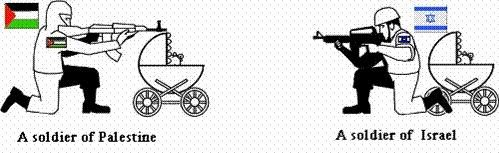
Where is the Carriage?
Saturday, July 15, 2006
The Axis Minus One
I remarked yesterday that Israel has declared itself, for all intents and purposes, in a state of war, although perhaps the only change represented by recent events is that this state of war is now more publicly visible and obvious.
So I’m still asking today, who wins?
News analysts at Fox – I avoid other cable news outlets, I have very limited internet access, and that’s what’s on in the break room – continue to highlight Syrian and Iranian culpability for recent attacks by their Hezbollah proxies (if not Iranian forces themselves).
I continue to think that Israel’s enemies overestimate the capabilities, will, and raw power possessed by Israel, just as they underestimated the US.
One of our young analysts, in a lull between other activities, speculated that what this really may have been about was an Iranian show of force during a moment of relative media quiet.
His premise is that Iran, at least as publicly acknowledged or discussed by major (non-conservative media), has not been perceived as a significant military threat beyond its potential if they acquire nuclear weapons. Even by those in the know – and that would surely include analysts and decision-makers in Israel – it is entirely possible to think Iran at least somewhat over-enamored of their own prowess. No one has suggested Iran possesses more hubris than actual threat, at least in the degree Saddam and his military apparently possessed.
But it may well be that Iran wants to make a point about their non-nuclear capabilities. If so, the message follows the lines of: with our without nukes, you are vulnerable to a wide range of potential threats. Iranian proxies come in many sizes, shapes and capabilities, and while analysts might discuss these threats as well-known and understood, Iran may have concluded that public opinion in various target audiences may need a more visible orientation to the damage they can do on an important US ally, and by extension politically and diplomatically, on the US itself.
Consider recent developments. A recent de-inflating show of force notwithstanding, much of the public discussion about North Korean belligerence assume that their likely possession of nuclear weapons in some form and quantity makes it virtually impossible for the US and its allies to plausibly consider a military deterrence (or even remotely military options). The Iranians surely crave that kind of standing and leverage, and one might interpret their recent bluster as seeking just that kind of “legitimacy.”
I remarked recently, that for all scorn and derision that accompanied the President’s remarks in his 2003 State of the Union Address, his remarks seem quite prescient in light of recent turn of events, at least in light of media coverage, public worry, and concern.
President Bush’s political enemies suggest that this is merely a “self-fulfilling prophesy,” whereby the President and his Administration somehow just made the world “that much more angry at us.” This completely ignores, of course, that a majority of the world and its leaders have been angry (read envious) of the US and our power and influence for the past 30 years, if not longer. Does anyone remember the Iranian Revolution in 1979 and the taking of US hostages? This was widely reported (and perceived) as payback for all the sins we committed back then, back in the day.
Nothing much has changed since then, either in the way the naïve or politically, alternatively motivated misread public anger on the “Arab Street,” nor in the way Iranian operatives and principals have dedicated themselves to war against the US.
For the Iranians, they may view current circumstances as an opportunity to inflate their standing as Major Threat. They may want to nudge North Korea over a bit, and steal some of that mojo. They would thus rob the US of several more attractive military options, while at the same time vouchsafe their own military capabilities.
One other possibility exists, though I consider it remote, it starts to sound at least plausible.
Iran knows that Israel possesses a nuclear capability. Surely Israeli has long benefited from the implicit threat of nuclear retaliation against any aggressor. This fact forms the core of the Iranian justification for seeking a nuclear military capability in the first place. It is the all too real hammer, that for so long has spoiled many a Middle Eastern potentate’s dreams of a “purified” Arab world.
Iran wants nuclear weapons. Maybe they have them already, or are extremely close, or someone offers to make them available, under certain conditions.
How willing would a Middle Eastern Government be to sacrifice other people, Arab or otherwise, if it meant some highly significant political or military gain? Haven’t the Arab nations of the Middle East, and even their Hirabah proxies, used the Palestinians in just this way? Not willing to actually help them in real terms, and entirely unwilling to accept them as refugees, the Palestinians have nevertheless been useful as diplomatic cover for anti-Israel (and thereby anti-US) hostility?
Wouldn’t Iran and the Hirabah proxies they manipulate, greatly benefit from an Israeli first strike with nuclear weapons?
It would instantly justify Iranian acquisition of nuclear weapons. It would be a kind of nuclear declaration of war, and if in the very next breath, Iran came to possess a nuclear capability, I think the overwhelming response of the world community would be, “why of course they need nuclear weapons! The Israelis have them, and they have proved they will use them against their enemies!” Sadly, no amount of public expressions of outrage, nor any form of diplomatic initiative, will diminish that public perception. And thus the Iranians get what they want.
Where would Iran get that capability? I don’t think they’d need to wait through the tedious and time-consuming process of completing their nuclear weaponization process or related industry. That someone, that nuclear rogue state, so starved for cash and capital, would make an eager seller to cash flush Iranian purchasers.
The Axis Minus One remains as grave a threat as ever.

Subscribe to Posts [Atom]

